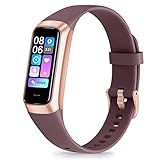
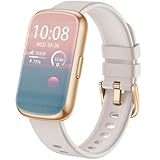
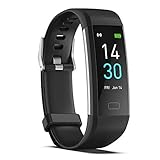
Fitbit
Charge 6 Fitness Tracker
A slim fitness tracker with built-in GPS, continuous heart rate, and up to 7 days of battery.
Score 8.2 out of 10Very good
Highly reviewed · Mid range
Fitness trackers compared by accuracy, battery life, and health features. Aggregated product ranking, refreshed weekly.
1,390 models in the source rankings · 13 products listed · Updated November 20, 2026
Fitbit
A slim fitness tracker with built-in GPS, continuous heart rate, and up to 7 days of battery.
Score 8.2 out of 10Very good
Highly reviewed · Mid range

WHOOP
Score 8.6 out of 10Very good
Highly reviewed

Fitbit
Score 8.8 out of 10Very good
Each mark is one product, placed by its score out of 10

Water resistant · Highly reviewed · Budget
Score 9.8 out of 10
Score 9.8 out of 10

Bluetooth 5.3 · Water resistant · Highly reviewed · Budget
Score 9.7 out of 10
Score 9.7 out of 10

Highly reviewed · Premium
Score 9.6 out of 10
Score 9.6 out of 10

Highly reviewed · Premium
Score 9.5 out of 10
Score 9.5 out of 10

Popular · Mid range
Score 9.3 out of 10
Score 9.3 out of 10

Water resistant · Highly reviewed · Premium
Score 9.2 out of 10
Score 9.2 out of 10

Highly reviewed · Mid range
Score 9.1 out of 10

Water resistant · Highly reviewed · Mid range
Score 9.0 out of 10

Highly reviewed · Budget
Score 8.8 out of 10
Score 8.8 out of 10
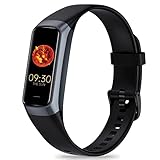
Water resistant · Well reviewed · Budget
Score 8.8 out of 10
Score 8.8 out of 10
| Rank | Model | Score | Key feature |
|---|---|---|---|
| 01 | Fitbit Charge 6 Fitness Tracker | 8.2/10 | - |
| 02 | WHOOP Wearable Fitness Tracker | 8.6/10 | Water resistant |
| 03 | Fitbit Air (Berry) | 8.8/10 | - |
| 04 | Bakoor Fitness Tracker | 9.8/10 | Water resistant |
| 05 | Cillso Smart Watch | 9.7/10 | Bluetooth 5.3 |
| 06 | Apple Watch Series 12 GPS 42mm Smartwatch | 9.6/10 | Up to 24 hours of normal use per charge |
| 07 | Apple Watch SE 3 GPS 40mm Smartwatch | 9.5/10 | Temperature sensing for Vitals and Cycle Tracking apps |
| 08 | Garmin vívoactive® 5 | 9.3/10 | Battery life up to 11 days in smartwatch mode |
| 09 | WHOOP 5.0/MG Screenless Fitness | 9.2/10 | Water resistant |
| 10 | Amazfit Helio Strap Screenless Activity Tracker | 9.1/10 | - |
| 11 | Google Fitbit Air Special Edition Stephen Curry | 9.0/10 | Water resistant |
| 12 | Samsung Galaxy FIT 3 | 8.8/10 | - |
| 13 | Zeacool Fitness Tracker | 8.8/10 | Water resistant |
When selecting a fitness tracker, consider your primary fitness goals and lifestyle. Are you focused on running, swimming, or general daily activity? Different trackers excel in various categories. Budget matters too—quality options range from under $25 to nearly $180. Think about whether you need GPS, water resistance, or specialized sports modes that align with your routine.
Battery life is a critical factor often overlooked by shoppers. Some trackers last days while others require daily charging. Wearable comfort matters for all-day tracking accuracy. Consider band materials, screen size, and overall weight. A tracker you'll actually wear consistently delivers better health insights than a feature-rich device sitting in a drawer.
Compatibility with your smartphone ecosystem shapes your experience significantly. iOS users need Apple-friendly devices, while Android users have broader options. Check if the companion app offers intuitive data visualization and meaningful metrics. Syncing reliability and cloud storage features enhance long-term health tracking capabilities and trend analysis.
Heart rate monitoring accuracy, sleep tracking depth, and integration with other health apps vary considerably across brands. Premium models offer advanced metrics like SpO2, stress levels, and menstrual cycle tracking. Read verified user reviews focusing on real-world performance rather than marketing claims. Balance features against price to find your optimal value proposition.
Each list aggregates published product rankings for its category and lists each product once, in aggregated order.
Scores come from the aggregated rankings. Titles, features and photos come from each product's retailer listing at the last refresh.
Rankings are refreshed every week, so products move up, down or out as the underlying rankings change.
Prices and availability change often. Check the current price before you buy.