Best Video Projectors

Video projectors compared by brightness, resolution, and connectivity. Aggregated product ranking, refreshed weekly.

1,678 models in the source rankings · 10 products listed · Updated November 20, 2026

This week's ranking

Score spread

Each mark is one product, placed by its score out of 10

01
7.510
  1. Rank 1: Score 9.8 out of 10
  2. Rank 2: Score 9.8 out of 10
  3. Rank 3: Score 9.6 out of 10
  4. Rank 4: Score 9.4 out of 10
  5. Rank 5: Score 9.3 out of 10
  6. Rank 6: Score 9.2 out of 10
  7. Rank 7: Score 9.0 out of 10
  8. Rank 8: Score 8.9 out of 10
  9. Rank 9: Score 8.8 out of 10
  10. Rank 10: Score 8.8 out of 10

Related products

Top picks

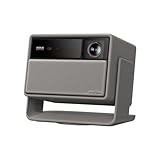
  1. Rank 1TOPTRO Outdoor-Projector-4K VIDAA Live TV/40W Dolby/920 ISO40W · 920 ANSI lumens brightness (ISO standard) · 2×20W dual-cavity speakers with Dolby Audio
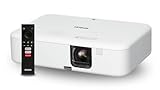
  2. Rank 2HAPPRUN Official Licensed Google TVWi-Fi
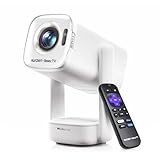
  3. Rank 3XGIMI HORIZON 20 4K RGB Triple Laser Home Projector240 Hz

At a glance

Buyer's guide: how to choose video projectors

Selecting the right video projector depends on your primary use case and space constraints. Home theater enthusiasts prioritize image quality and contrast ratios, while business professionals need brightness and portability. Consider whether you'll project in a dedicated dark room or a space with ambient light. Budget ranges from under $100 for basic models to over $1,400 for premium cinema-grade projectors with advanced features.

Brightness measured in lumens directly impacts image visibility in different lighting conditions. Projectors under 3,000 lumens work best in darkened rooms, while 4,000+ lumens suit brightly lit spaces. The lamp lifespan and replacement costs also influence long-term ownership expenses. LED and laser light sources offer better durability than traditional lamps, though they typically command higher prices upfront.

Resolution and refresh rates determine picture sharpness and motion smoothness. Full HD (1080p) projectors deliver excellent clarity for most viewing distances, while 4K models suit larger screens closer to viewers. Gamers and sports fans benefit from 120Hz refresh rates that eliminate motion blur during fast-action scenes. Consider your primary content: movies, presentations, or sports streaming.

Connectivity options and throw distance affect installation flexibility. Short-throw projectors work in compact spaces where traditional models won't fit. Verify HDMI ports, wireless casting capabilities, and keystone correction features. Noise levels matter in quiet viewing environments—models under 30 decibels run nearly silently. Read customer reviews focusing on actual performance in your intended use scenario before purchasing.

Frequently asked questions

What's the difference between DLP, LCD, and LCoS projector technologies?
DLP projectors use spinning color wheels and offer excellent contrast with minimal pixelation. LCD models deliver bright, color-accurate images ideal for presentations. LCoS projectors balance both technologies, providing superior blacks and smooth motion. Each technology suits different applications—DLP for home theaters, LCD for offices, and LCoS for professional video production.
How far should a projector be from the screen?
Throw distance depends on the projector's lens focal length and zoom capability. Standard projectors typically need 1.5 to 2 times the screen width as viewing distance. Short-throw models work in tight spaces, projecting large images from just 3-4 feet away. Check manufacturer specifications for your screen size to determine optimal placement and image quality.
Can I use a video projector with ambient room lighting?
Higher brightness projectors (4,000+ lumens) perform better in lit rooms, though they're still not ideal. Dark or dimly lit spaces always produce superior image quality and contrast. If ambient light is unavoidable, consider a high-lumen model and install blackout curtains or light-blocking materials. Professional installations in bright environments often combine bright projectors with specialized light-rejecting screens.
What maintenance do video projectors require?
Regular cleaning of air filters prevents overheating and extends projector lifespan. Dust accumulation reduces brightness and cooling efficiency. Lamp-based projectors require periodic bulb replacements as output diminishes over time. Avoid moving projectors while hot, and store them in cool, dry environments. LED and laser projectors need less maintenance but still benefit from occasional filter cleaning.
Is 4K resolution necessary for home theater projectors?
4K projectors deliver sharper images than 1080p models, particularly on larger screens beyond 100 inches. For typical 80-100 inch home theater setups at normal viewing distances, Full HD provides excellent clarity and costs significantly less. 4K becomes worthwhile if you watch native 4K content and sit relatively close to large screens. Consider your content sources and viewing distance before investing in premium 4K models.

Glossary: key terms

Lumens
A unit measuring projector brightness intensity. Higher lumen ratings enable clearer images in lit rooms. Home theater projectors typically range from 1,000-3,000 lumens, while business models reach 4,000+ lumens for well-lit spaces.
Throw Ratio
The mathematical relationship between projector-to-screen distance and image width. A 1.5:1 throw ratio means the projector must be 1.5 times the screen width away. Lower ratios indicate short-throw capability for compact installations.
Keystone Correction
A digital feature that adjusts image distortion when the projector sits at angles to the screen. Vertical and horizontal keystone correction maintains rectangular image shape despite non-perpendicular projection angles, improving viewing quality.
Contrast Ratio
The measurement comparing brightest whites to darkest blacks a projector produces. Higher ratios indicate better color depth and detail visibility in dark scenes. Premium projectors achieve 10,000:1 or greater ratios for cinema-quality performance.

How these rankings work

Aggregated rankings

Each list aggregates published product rankings for its category and lists each product once, in aggregated order.

Listing details

Scores come from the aggregated rankings. Titles, features and photos come from each product's retailer listing at the last refresh.

Refreshed weekly

Rankings are refreshed every week, so products move up, down or out as the underlying rankings change.

Prices and availability change often. Check the current price before you buy.