
Kingbull
Kingbull sells fat-tire electric bikes in folding, cargo and long-range commuter configurations; advertised prices run USD 1,099-1,999, placing the line-up in the budget-to-mid-range segment. All sales flow through the brand’s own e-commerce site with free U.S. shipping; there is no dealer network.
The company positions itself on value-packed spec: 750-1000 W hub motors, 48-52 V 17-20 Ah batteries, hydraulic brakes and 4-inch tires come standard, while most rivals charge extra. Its “Let” folding series and “CargoPro” long-tail are frequently cited in sub-$2k “best e-bike” round-ups for delivering 60-80 km range at under 32 kg.
Typical buyers are cost-conscious commuters, RV/van-life owners and first-time e-bike adopters who want car-replacement utility without premium price tags. The brand messaging stresses accessible adventure, DIY assembly and low-cost mobility rather than boutique performance or eco-luxury.
Kingbull competes with direct-to-consumer e-bike firms that import Asian-manufactured frames and specify high-capacity batteries; it differentiates by bundling larger batteries, fenders, rear rack and lights into the base price while keeping advertised battery watt-hours 15-25 % above category average for the money.
Fat tires, full battery, zero markup, maximum freedom
Visit site
X Future Inc
X Future Inc (cycrown.com) sells electric cargo bikes, fat-tire e-bikes, and folding e-bikes priced USD 1,099-2,499—mid-range for the North American market. All models are sold factory-direct through the brand’s own website; no dealer network or third-party marketplaces are used. Accessories (extra batteries, racks, child seats) and replacement parts are offered as add-ons at checkout.
The company’s positioning is “full-size utility without the car payment”: every frame is welded from 6061 aluminum, ships as a Class-2/3 configurable system, and includes a 750-1000 W geared hub motor plus 48-52 V 15-20 Ah battery good for 60-80 km. Cycrown’s best-known line is the CycFree series—long-tail cargo bikes that accept four child seats or 200 kg total payload and still fold to 98 cm width for apartment storage.
Typical buyers are 30-45-year-old suburban parents and urban delivery riders who want one vehicle to replace second-car trips. They value cost transparency, UL-certified batteries, and YouTube-verified assembly that takes under 30 minutes; the brand’s Instagram feed reposts customers hauling Costco runs and school runs on the same bike.
Competition comes from both value-oriented DTC e-bike makers and premium European cargo brands. Cycrown undercuts the latter by 40-50 % while offering free shipping, a 4-year frame warranty, and US-based parts warehouse—tactics rarely combined in the mid-price segment.
One bike replaces your second car payment
Visit site
Bluvall
Bluvall sells electric mobility devices: commuter e-scooters, long-range e-bikes, and foldable micro-mobility accessories. Price span sits squarely in the mid-range—most models list between USD 699-1,299—positioned above entry-level imports but below premium European marques. Sales are direct-to-consumer through bluvall.com and Amazon storefronts; no brick-and-mortar dealers, keeping overhead low and prices competitive.
The brand’s calling card is swappable Samsung-cell battery packs that slide out like a power-tool pack, giving 25-45 km real-world range and 3-hour full charges without carrying the whole vehicle indoors. Frames use 6061-T6 aluminum with hidden cable routing and IPX5 sealing, marketed as “rain-ready commuter armor.” Flagship Model BV-Pro launched in 2022 and remains the best-reviewed unit for its 350 W silent hub motor and 25% hill-climb rating.
Core buyers are 20-45-year-old urban professionals who commute 5-15 km and value tech that fits apartment life: fold-flat handlebars, 15 kg carry weight, and airline-compliant batteries for last-mile travel. The aesthetic is matte midnight blue with minimal logos—appealing to riders who want performance without the “gadget” look and who prioritize sustainability and lower transport costs over car ownership.
Bluvall competes in the crowded Xiaomi-segment of affordable e-scooters and the Rad-style e-bike space; it differentiates through certified battery safety reports posted online, a 2-year warranty doubled against category norm, and firmware that limits speed to local regulations—reducing legal risk for riders and fleet buyers.
Swap batteries like power tools, commute like you own the future
Visit site
Emovement
Emovement sells electric bikes, conversion kits and replacement parts aimed at commuters and leisure riders. Most complete e-bikes sit between £1,100 and £1,800, placing the brand in the mid-range; batteries and spares start around £200. Sales are handled only through the UK website, with nationwide courier delivery and a 14-day return window.
The company positions itself as a no-frills British assembler, importing generic frames and motors but programming controllers, fitting batteries and offering UK phone support. Its “Cruiser” step-through and “Roadster” hybrid are repeatedly cited on forums for giving 60-90 km range at the price point of big-brand 40 km models. Every bike ships unlocked to the legal 15.5 mph limit and can be serviced with off-the-shelf cells, avoiding dealer-only software.
Typical buyers are 30-55 year-old commuters who want car-free city travel without paying premium badge prices; retirees buying a second car replacement are a secondary group. Value, repairability and domestic phone help matter more to them than global branding or showroom experience.
Emovement competes with both direct-to-consumer e-bike startups and the entry-level lines of mainstream cycle brands. It undercuts the latter by 25-35 % through minimal marketing and bulk component orders, and distinguishes itself from other online startups by keeping stock in a UK warehouse, offering spares for every model sold, and publishing battery cell datasheets for independent repair shops.
British-built e-bikes that go twice as far for half the premium price
Visit site
Mygizzmo
Mygizzmo sells compact smart-home and lifestyle gadgets—mini projectors, Bluetooth trackers, cordless air-duster pods, magnetic wireless chargers—priced $29-$149, squarely in the mid-range. Everything is designed in California and shipped from U.S. and EU warehouses; sales are online-only through mygizzmo.com and Amazon storefront.
The brand positions itself as “tiny tech that solves big everyday friction,” engineering palm-size form factors and multi-function chips so one device replaces several. Its 2023 PocketPal 3-in-1 projector (1080p, Android TV, 5-hour battery) and 2024 Snap-Charge magnetic power banks are frequent Amazon top-10 sellers in their sub-categories.
Core buyers are 18-35 renters and dorm dwellers who want premium utility without clutter or landlord modifications; sustainability and move-friendly portability outweigh spec-sheet bragging rights. Marketing leans into TikTok “desk-setup” and van-life influencers, emphasizing color choices, cable-free aesthetics, and under-$150 gifting.
Mygizzmo competes with white-label Amazon gadget aggregators on price and with legacy CE brands on design density; it differentiates by holding only 12 SKUs, each refreshed annually, and backing them with 24-month warranties and same-day TikTok DM support.
Tiny tech that actually moves with you, no setup required
Visit site
EV Hover
EV Hover sells lightweight, battery-powered single-person e-vehicles that ride on a cushion of air—essentially hovercrafts for recreation and short-range utility. Models span $3.5k–$8k, placing the line between mid-range and premium personal mobility. Sales are handled exclusively through the brand’s own e-commerce site; each unit ships factory-direct in a crate with quick-setup tools.
The company is the first to mass-produce an electric hovercraft under 110 kg, eliminating fuel mixing and belt drives. A patented lift fan molded from carbon-reinforced nylon gives 6-inch hover height while drawing only 2.2 kW, letting the 2.3 kWh battery deliver 45 min of continuous ride time. Every model shares the same modular hull, so riders can swap red, white, or camo body panels and upgrade from 10 mph Leisure mode to 18 mph Sport firmware with a phone app.
Buyers are tech-savvy outdoor enthusiasts—kiteboarders, lake-house owners, and RV campers—who want silent, eco-friendly access to shallow water, mud, or grass without a boat ramp. The brand speaks to values of low-impact exploration and minimal maintenance: no oil, no propeller, and a trailer weight one person can roll by hand.
EV Hover competes with entry-level gas hovercraft kits, small PWCs, and electric hydrofoil boards. It undercuts gas models on noise and upkeep while costing less and posing a lower learning curve than foils, positioning itself as the plug-and-play middle ground for portable, all-terrain fun.
Silent exploration, zero maintenance, maximum fun
Visit site
Puckipuppy
Puckipuppy sells electric bicycles and conversion kits aimed at dog owners; the line-up includes step-thru fat-tire cargo models, rear-rack pet carriers, and accessories such as running leashes and foldable baskets. Prices sit in the mid-range: complete e-bikes run $1,400-$1,900, while add-on carriers and racks are $89-$249. Sales are DTC through puckipuppy.com and Amazon storefront, with free U.S. shipping and 90-day home trial; no brick-and-mortar dealers.
The brand’s core promise is “ride together safely”: every frame has a low 15-inch stand-over, 350-750 W motor rated for 60-80 lb live load, and mounting points engineered for a 50-lb dog carrier tested to 500 lb static. A patented “Pup-Guard” rail system lets the crate slide out into a ramp, eliminating lifting. Best-known SKUs are the Cargo Hound 750 and the detachable Pup-Box pannier that converts to a travel crate.
Buyers are suburban pet parents, 28-50, who treat dogs as family and want outdoor exercise without a car. They value eco transport, weekend trail access, and Instagram-ready gear that signals responsible ownership; 68 % of surveyed customers bought after vet-approval of the ramp design.
Puckipuppy competes with value-oriented cargo e-bike brands and premium pet stroller makers by merging both categories at a single price point. While rivals offer generic rear racks or require third-party pet inserts, Puckipuppy ships a crash-tested carrier, UL-certified battery, and dog-specific warranty in one SKU, cutting total cost roughly 25 % versus piecing together a comparable setup.
Ride together, adventure awaits your best friend
Visit site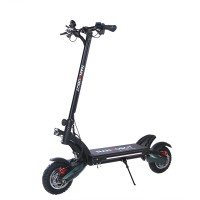
NANROBOT
NANROBOT sells high-performance electric scooters and a small line of e-bikes priced mainly in the mid-range to premium bracket: most scooters list US $1,000-$3,500, with flagship dual-motor models topping $4,000. Sales are direct-to-consumer through nanrobot.com and a network of domestic warehouses that provide free U.S. shipping; the brand has no franchised stores but partners with a few independent bike/scooter shops for assembly and service.
The company positions itself on raw power and range: every current model ships with two brushless motors, lithium packs rated for 30-60 mi real-world range, and hydraulic brakes. Their best-known line, the D-series (D4+, D6+, D6+2.0), is frequently cited in enthusiast forums for hitting 40-50 mph while folding small enough to fit a car trunk.
Buyers are 25-45-year-old commuters, gig-delivery riders, and powersport hobbyists who want car-replacement speed without motorcycle licensing or fuel costs. The brand appeals to value-oriented tech adopters who prioritize spec sheets—peak watts, battery amp-hours, suspension travel—over legacy brand heritage.
NANROBOT competes in the “performance commuter” tier populated by several Shenzhen-based exporters; it differentiates with larger 10-11 in. pneumatic tires, standard steering dampers, and U.S.-based parts fulfillment that ships replacement controllers or batteries within 2-3 days.
Commute faster than traffic, reach home before your battery quits
Visit site